HUMAN PDPK2

PDPK2P
Homo sapiens (Human)
UniProt Q6A1A2 ยท Q6A1A2_PDPK2_HUMAN_KD1
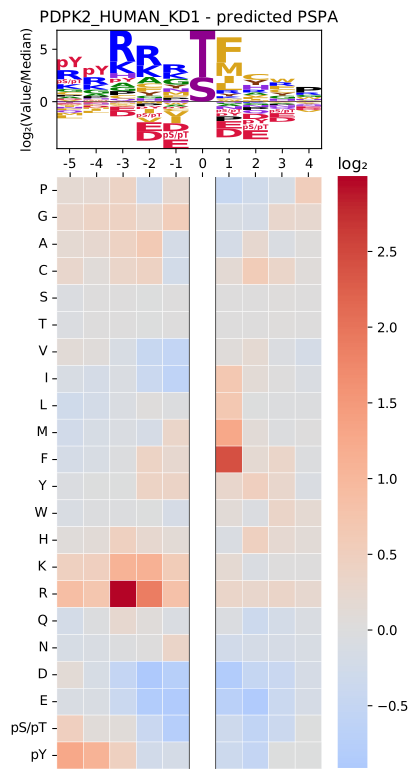
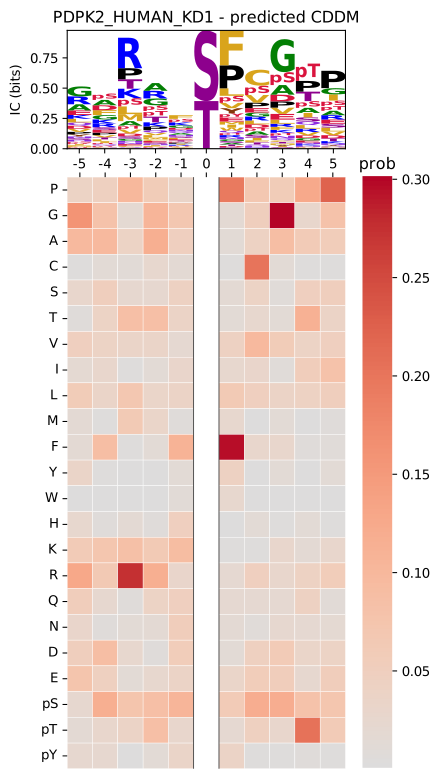
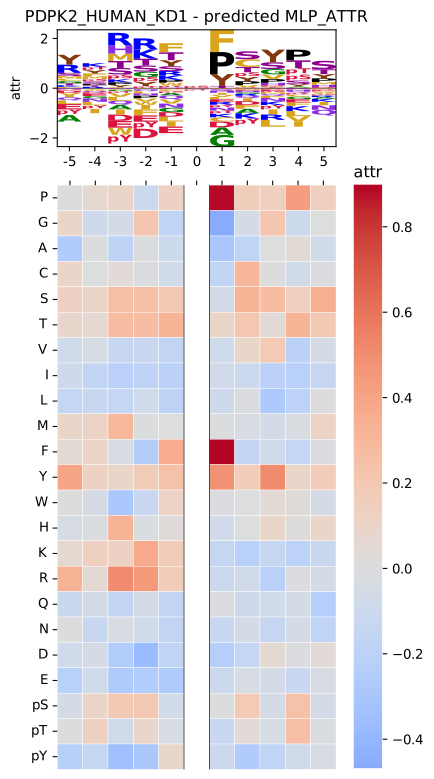
Predicted substrate motif from each available method.
Predicted motifs are computational: each is the inverse-distance-weighted mean of the nearest labeled kinases, and none has been experimentally validated. The nearest-neighbor distance shown with a prediction is a proximity measure, not a calibrated accuracy.
PSPA
CDDM
MLP-attr
PSPA
Nearest labeled kinases: the prediction is the inverse-distance-weighted mean of their reference motifs for this method (distance shown):
PDK1 (1.41), SGK1 (16.91), PKACA (17.15), P70S6K (17.26), PKACB (17.26)
CDDM
Nearest labeled kinases: the prediction is the inverse-distance-weighted mean of their reference motifs for this method (distance shown):
PDK1 (1.41), SGK1 (16.91), PKACA (17.15), P70S6K (17.26), PKACB (17.26)
MLP-attr
Nearest labeled kinases: the prediction is the inverse-distance-weighted mean of their reference motifs for this method (distance shown):
PDK1 (1.41), SGK1 (16.91), PKACA (17.15), P70S6K (17.26), PKACB (17.26)
Predicted PSPA

Nearest labeled kinases: the prediction is the inverse-distance-weighted mean of their reference motifs for this method (distance shown):
PDK1 (1.41), SGK1 (16.91), PKACA (17.15), P70S6K (17.26), PKACB (17.26)
Predicted CDDM

Nearest labeled kinases: the prediction is the inverse-distance-weighted mean of their reference motifs for this method (distance shown):
PDK1 (1.41), SGK1 (16.91), PKACA (17.15), P70S6K (17.26), PKACB (17.26)
Predicted MLP-attr

Nearest labeled kinases: the prediction is the inverse-distance-weighted mean of their reference motifs for this method (distance shown):
PDK1 (1.41), SGK1 (16.91), PKACA (17.15), P70S6K (17.26), PKACB (17.26)